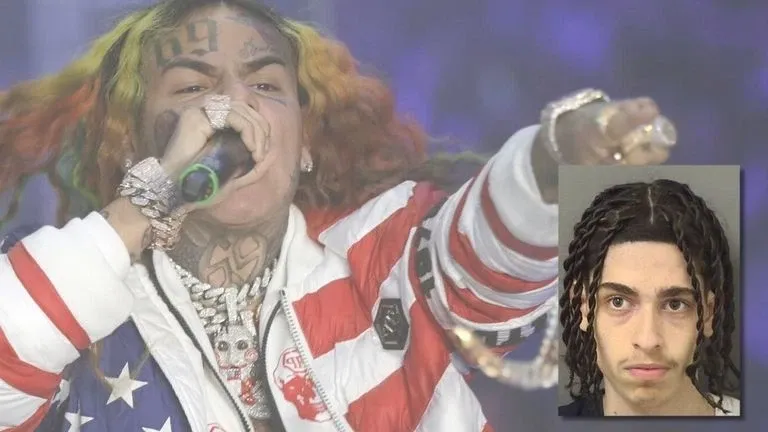
The arrest of Pedro Rodriguez, a 19-year-old from West Palm Beach, marks a development in a November incident that speaks to larger questions about fame, security, and the particular vulnerabilities that come with visibility.
The case centers on a South Florida estate belonging to Daniel Hernandez, known to millions as Tekashi 6ix9ine — a figure whose career has been defined as much by controversy as by music. What matters here isn't merely the celebrity angle, but what the incident reveals about the intersection of wealth, recognition, and risk.
On November 16, 2025, the Duckweed Road home in Wellington, Florida became a crime scene. Multiple armed men wearing masks forced their way into the residence — handguns drawn, demands clear. What they encountered wasn't the rapper himself, but his 60-year-old mother, alone in a home that should have been a sanctuary.
The intruders moved through the property with purpose, searching for cash, jewelry, and car keys. They briefly held Hernandez's mother outside — a detail that shifts this from headline to human story, from celebrity crime to something more visceral. By the time deputies arrived, responding to a 911 call from another resident, the scene had already unfolded. The perpetrators had fled with cash, keys, and luxury items.
What they left behind was evidence. Surveillance footage captured their presence. Cellphone data would later trace their movements. And in their haste, they left traces that would eventually lead investigators to Rodriguez's door.
The Palm Beach County Sheriff's Office spent weeks connecting digital breadcrumbs to physical evidence. On December 19, deputies arrived at Rodriguez's residence in West Palm Beach. What they found painted a clear picture: handbags belonging to the rapper's girlfriend, clothing matching descriptions from the surveillance footage, a firearm believed to have been used in the invasion, and a quantity of narcotics consistent with intent to sell.
Rodriguez now faces four charges that carry significant weight: home invasion robbery with a firearm, false imprisonment of a person, grand theft, and possession of marijuana with the intent to sell. He remains held without bond at the Palm Beach County Main Detention Center, his freedom suspended as the case moves forward.
This incident didn't happen in a vacuum. At the time of the invasion, Hernandez himself was under house arrest in South Florida, serving time for previous legal troubles tied to federal racketeering and firearms charges. His public life — a catalog of controversy, cooperation with federal prosecutors, and calculated provocation — had already positioned him as a figure who draws both attention and animosity.
The boldness of the invasion speaks to something more than opportunism. This wasn't a random target. This was a home associated with wealth, visibility, and notoriety — factors that, in combination, create a particular kind of vulnerability.
High-profile crimes at celebrity residences expose uncomfortable truths about security in an age of social media and constant visibility. Gates and cameras offer protection, but they can't eliminate the risk that comes with being known. In affluent communities like Wellington, where wealth concentrates and privacy is presumed, such incidents disrupt the illusion of safety.
For Hernandez, these concerns are amplified. His controversial public persona — built on confrontation, on pushing boundaries, on cultivating a dangerous image — keeps him in the spotlight beyond his musical output. That spotlight, however carefully managed, creates exposure. It draws eyes, and sometimes it draws those with intentions that have nothing to do with admiration.
The incident also reflects broader trends: the erosion of celebrity privacy, the challenges law enforcement faces in protecting high-net-worth individuals from targeted crime, and the way social media posts displaying wealth can inadvertently function as advertisements for those willing to take considerable risk for considerable reward.
For Hernandez's mother, caught in the machinery of her son's fame, the invasion was personal in ways that transcend the celebrity narrative. She faced armed intruders alone. She was held outside her own home while strangers searched through her life. This is what vulnerability looks like when it stops being abstract.
Rodriguez's case will proceed through the Palm Beach County court system, where prosecutors are expected to pursue the charges with the seriousness they warrant. But questions remain. Investigators are likely exploring whether additional suspects remain at large, whether this incident connects to other armed burglaries in the region, and whether this was an isolated event or part of a larger pattern.
Meanwhile, in hip-hop and entertainment circles, observers will be watching for updates on Hernandez's security arrangements. Will this incident force a recalibration of how he navigates public life? Will there be statements addressing the impact on his personal safety, his family's well-being, his public image?
This is living history — a record of how visibility creates exposure, how wealth draws attention both wanted and unwanted, and how security measures can only go so far when someone is determined enough to breach them. The arrest of Pedro Rodriguez doesn't close this chapter. It merely turns the page.