The Kennedy Center — now renamed the Trump-Kennedy Center after a board vote that added President Donald Trump’s name to the iconic performing arts institution — is threatening a $1 million lawsuit against a veteran jazz musician who canceled his long-standing Christmas Eve concert in protest. The move comes amid a cascade of concert cancellations and mounting political controversy surrounding the center’s leadership and mission.
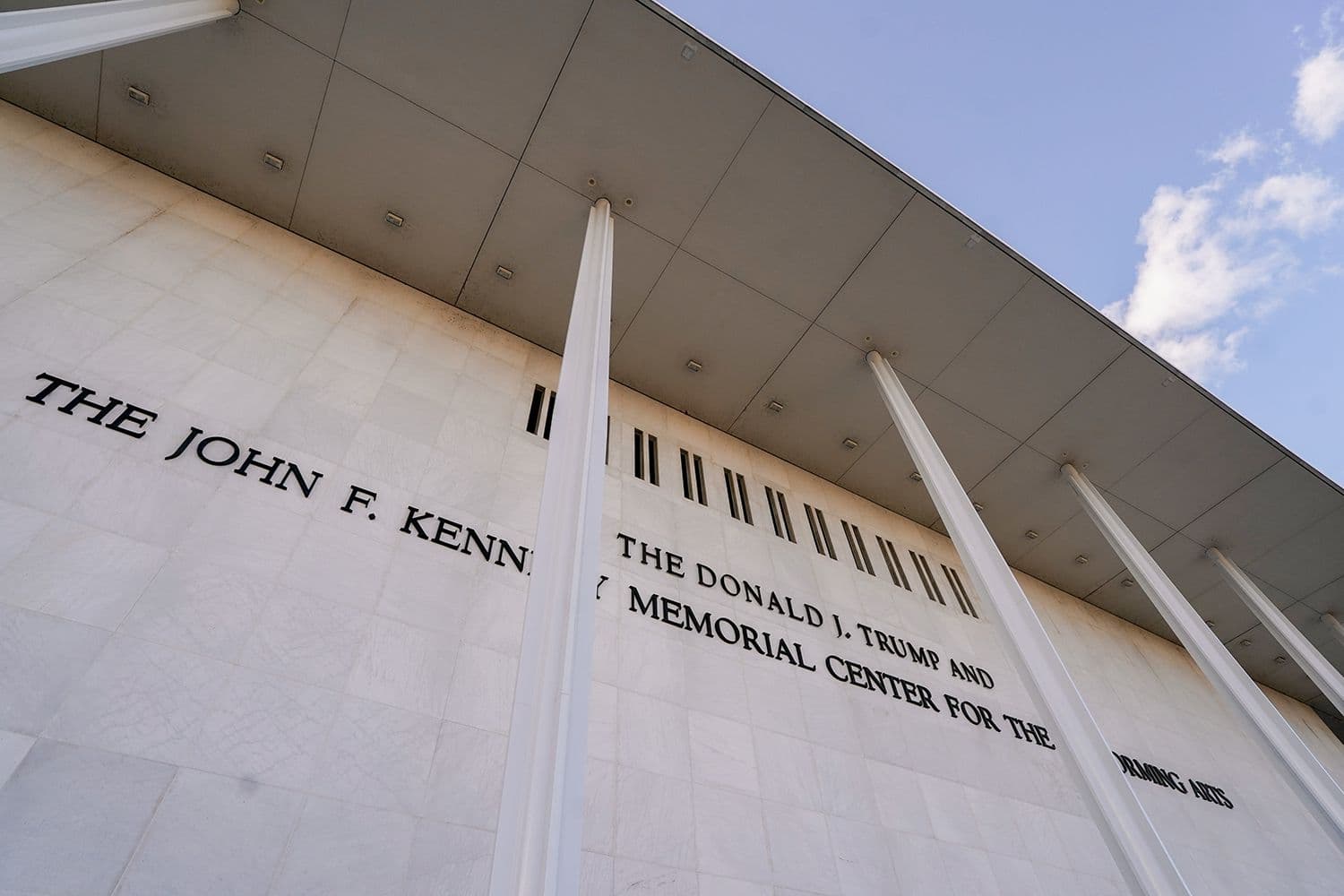
Founded in 1971 as the John F. Kennedy Center for the Performing Arts, the institution has long been one of the nation’s premier venues for music, theater, and cultural programming. But in December 2025, a board comprised largely of Trump appointees voted to rename the center to The Donald J. Trump and The John F. Kennedy Memorial Center for the Performing Arts, a change quickly reflected on the building’s exterior.
The renaming has drawn sharp criticism from political figures and the arts community alike, with Democratic Rep. Joyce Beatty filing a lawsuit challenging the legality of the board’s action, arguing that only Congress has the authority to rename a federally established memorial.
The controversy escalated when jazz musician Chuck Redd — who had hosted a beloved annual Christmas Eve jazz concert at the Kennedy Center for nearly two decades — canceled this year’s performance shortly after the renaming was made public. Redd said he withdrew upon seeing the Trump addition, a decision that has since drawn the venue’s ire.
In a letter obtained by media outlets, Kennedy Center President Richard Grenell — a Trump appointee — called Redd’s cancellation “classic intolerance” and blamed it for financial hardship at the nonprofit arts institution. He went on to warn that the center will pursue up to $1 million in damages against the musician, asserting that the cancellation was a politicized “stunt.”
The fallout hasn’t stopped with Redd. Multiple artists and ensembles, including the jazz group The Cookers and the dance troupe Doug Varone and Dancers, have canceled performances scheduled at the venue, particularly around New Year’s Eve and into early 2026. Critics from within the music community have cited the renaming and what they view as a politicized takeover as core reasons for their withdrawals.
Meanwhile, Rep. Beatty’s lawsuit aims to halt the renaming itself, asserting that the board lacked legal authority and that the action undermines the legacy of the Kennedy Center as a nonpartisan cultural institution.
The Kennedy Center conflict reflects larger tensions over politics and cultural institutions in the United States. For decades, venues like the Kennedy Center have been seen as bipartisan spaces that transcend party lines and celebrate diverse artistic expression. But the recent renaming and ensuing disputes illustrate how polarized the cultural terrain has become — from leadership control and symbolic representation to questions of artistic freedom and protest within the arts community.
Artists pulling out of scheduled shows point to a broader concern about how political influence can reshape not just institutional identity, but also the willingness of performers to participate in events they feel are misaligned with their values or audiences. The lawsuit by Rep. Beatty adds a legal dimension that could force interpretation of federal law regarding cultural memorials and institutional naming rights.
As the lawsuit by Rep. Joyce Beatty progresses, legal experts and arts administrators will be watching how courts weigh the alleged lack of statutory authority for renaming the Kennedy Center. At the same time, additional cancellations and performer reactions could continue to dampen the center’s programming schedule, potentially affecting ticket sales and community engagement into 2026.
The center’s leadership stance — including pursuing financial damages against protesting performers — may also influence public perception and artist willingness to engage with the venue long term.