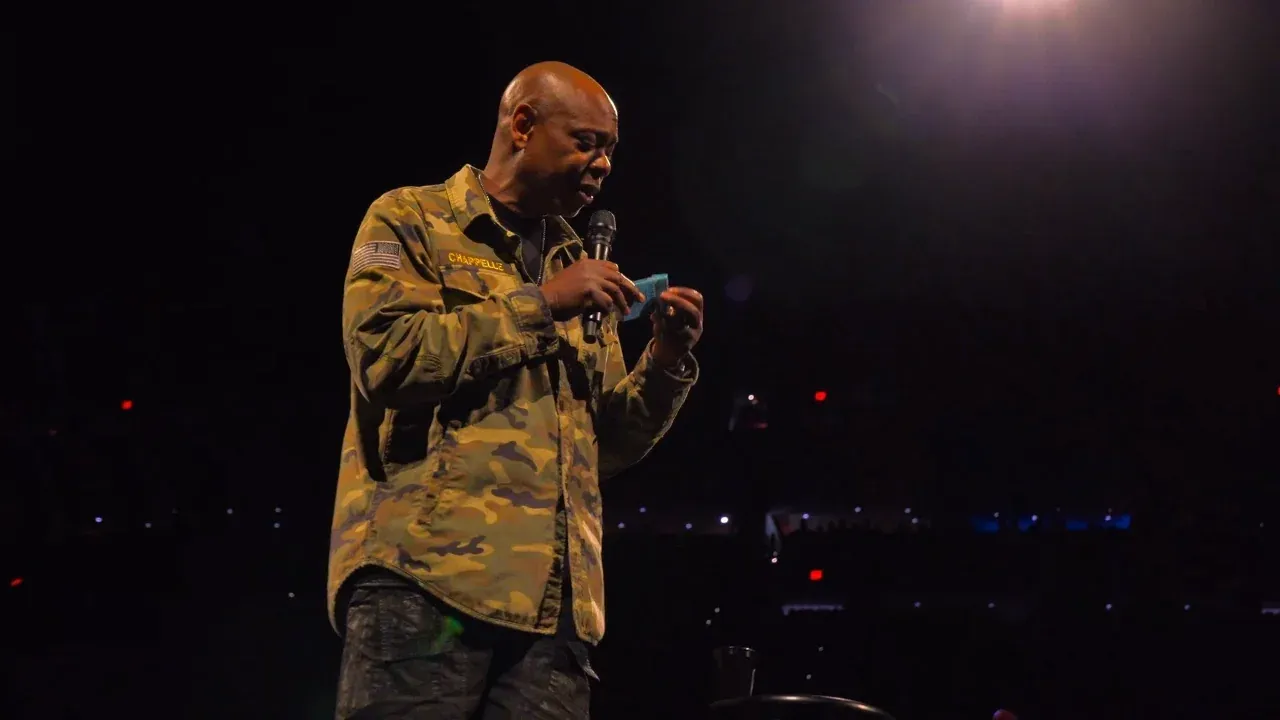
A producer who has accused Sean "Diddy" Combs of sexual battery has publicly condemned Dave Chappelle's latest Netflix special, The Unstoppable, for what he describes as repeated expressions of support for the embattled music mogul. The comments — delivered through joke and narrative — have left the accuser "unsettled" and reignited a familiar debate: where does comedy's freedom end and cultural responsibility begin?
This isn't merely about a handful of jokes in a stand-up special. It's about power, platform, and the weight of words when they touch on allegations of harm. It's about who gets humanized in the narrative and who gets left in the margins of the punchline.
The Unstoppable debuted on Netflix in December 2025, another milestone in Dave Chappelle's career as a comedian who has built his reputation on blending provocation with social commentary. The special covers terrain Chappelle knows well — personal experiences, observations of celebrities, cultural icons, and the moments where these worlds collide.
Within this material, Chappelle references Sean Combs in ways that, according to critics, frame the music mogul in a supportive or sympathetic light. The jokes and anecdotes appear designed to humanize Combs, to contextualize his cultural footprint beyond the allegations that have shadowed him in recent years. For some viewers, this is comedy doing what comedy does: finding humanity in complexity, refusing easy moral binaries.
For at least one accuser, however, the material felt like something else entirely — a minimization of trauma, a making light of serious allegations, a public dismissal wrapped in laughter.
Sean Combs has faced extensive legal scrutiny in recent years. Allegations and lawsuits related to sexual battery and misconduct have followed him through courtrooms and headlines, documented in news coverage and explored in projects like Netflix's own Sean Combs: The Reckoning. These aren't abstract claims. They represent lived experiences of people who say they were harmed.
When Chappelle brings Combs into his material — when he chooses to center the mogul's humanity, his cultural significance, his place in the broader narrative — he makes a choice about what story gets told and whose perspective gets amplified. In stand-up comedy, this is creative license. In the context of ongoing allegations, it becomes something more fraught.
The producer who spoke out described feeling unsettled by the way Chappelle's material seemed to erase or minimize the gravity of the accusations. When comedy treats serious allegations as backdrop for humor about celebrity or culture, it can inadvertently signal that the allegations themselves are less important than the cultural figure at their center.
This controversy sits at the intersection of two competing truths. Comedy, by its nature, exaggerates. It takes personal perspective and amplifies it. It finds humor in discomfort, challenges prevailing narratives, and refuses to be constrained by social consensus. Chappelle's career has been built on this principle — from Sticks & Stones to earlier work that courted both praise and backlash for tackling taboo subjects.
But prominence changes the equation. When someone with Chappelle's reach and influence frames a narrative, it resonates beyond the comedy club. It enters the cultural conversation with weight. For survivors and accusers of misconduct, material that appears to sympathize with alleged perpetrators isn't just comedy — it's a message about whose story matters, whose pain gets acknowledged, whose humanity gets centered.
The debate isn't new. It's the same conversation that emerges whenever comedy touches on trauma, assault, or allegations: whether humor can be a vehicle for reflection or whether it contributes to dismissing the pain and justice survivors seek. The line between these possibilities isn't fixed. It shifts based on context, on who's speaking, on who's listening, on what's at stake.
This moment reflects broader tensions about accountability in entertainment. Audiences increasingly scrutinize not just what artists say, but the implications of how they say it. Streaming platforms amplify reach, turning stand-up specials into cultural events that shape public perception. When Netflix hosts both The Unstoppable and Sean Combs: The Reckoning, it becomes a platform holding contradictory narratives — one examining allegations, the other appearing to humanize the accused.
For advocates working with survivors of sexual misconduct, moments like this feel like setbacks. When high-profile comedians frame alleged perpetrators sympathetically, it reinforces patterns where celebrity and cultural significance insulate powerful figures from accountability. It suggests that the story worth telling is the one about the fall of an icon, not the stories of those who say they were harmed along the way.
For defenders of comedy's freedom, the concern runs in the opposite direction: that artists will self-censor, that important conversations will be avoided, that the space for provocation and challenge will shrink under the weight of social pressure. Both perspectives carry truth. Both reflect real stakes.
Reactions continue to circulate across social media and entertainment circles. Chappelle's fanbase and defenders within comedy argue for the autonomy of artistic expression. Advocates for survivors see the material as emblematic of how culture still struggles to take allegations seriously when weighed against celebrity and influence.
Netflix, as the platform hosting this conversation, will likely face questions about how it navigates controversial material tied to ongoing legal narratives and cultural figures. The company profits from provocation — from specials that generate headlines and debate. But it also benefits from appearing responsive to concerns about harm and accountability.
The conversation won't resolve neatly. Comedy will continue pushing boundaries. Survivors will continue asking to be heard. The tension between these imperatives is part of the cultural landscape we navigate — a record of whose voices get amplified, whose pain gets acknowledged, and whose stories we choose to tell.
This is living history — messy, uncomfortable, unresolved. It's a chronicle of how power shapes narrative, how fame complicates accountability, and how laughter can carry weight far beyond the punchline.