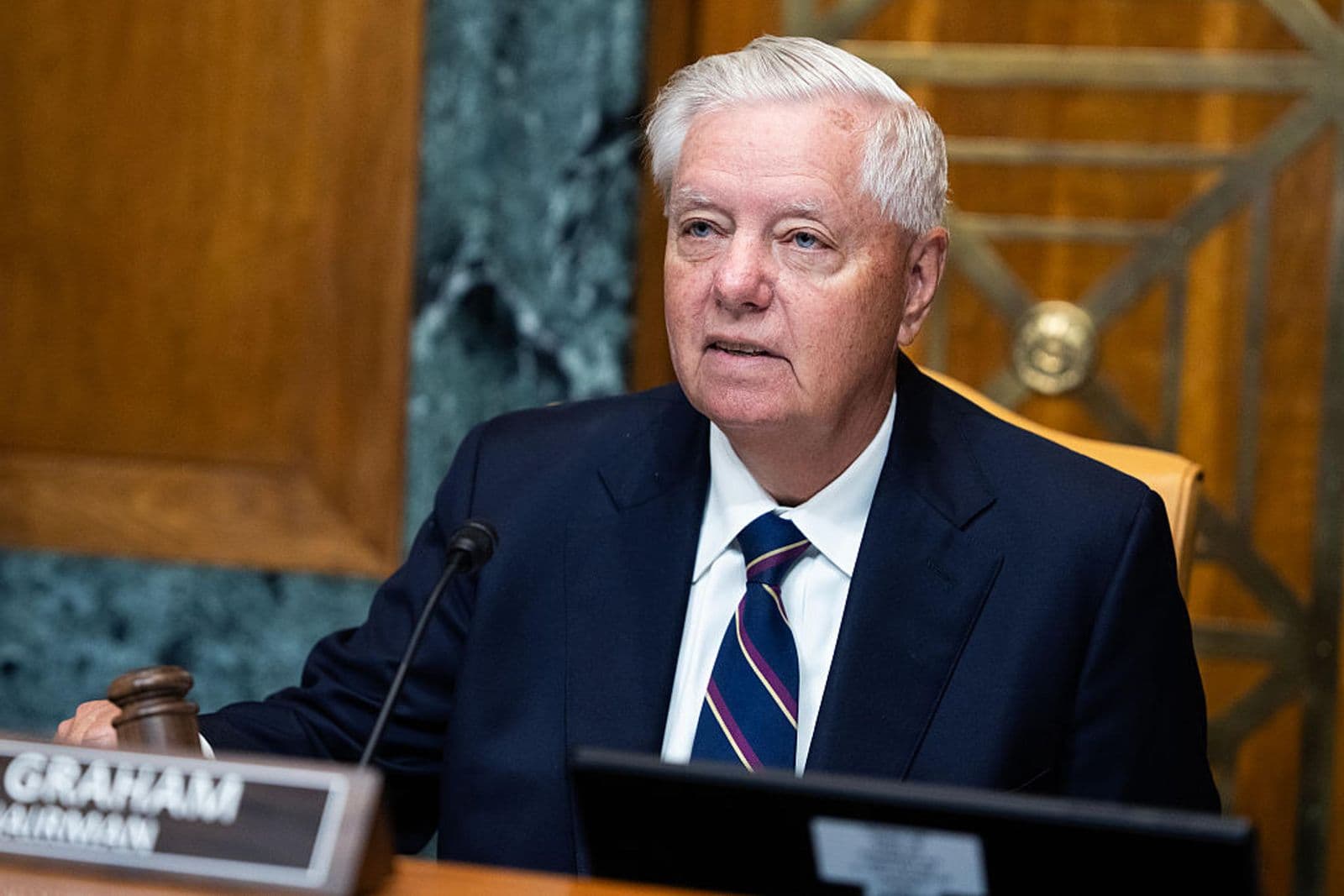
WASHINGTON — U.S. Sen. Lindsey Graham, a South Carolina Republican whose career stretched from the House impeachment of President Bill Clinton to the center of Donald Trump’s judicial and foreign policy battles, has died. He was 71.
Graham died Saturday evening, July 11, after what his office described as a “brief and sudden illness.”
A preliminary examination by the District of Columbia medical examiner found that Graham died from an aortic dissection caused by arteriosclerotic cardiovascular disease. His office said the death certificate will remain pending until toxicological and microscopic testing is complete.
Graham had represented South Carolina in the U.S. Senate since 2003, after winning election in 2002 to the seat once held by Strom Thurmond. Before joining the Senate, he served in the U.S. House, where he rose to national prominence as one of the Republican impeachment managers during Clinton’s 1998 impeachment proceedings.
Over more than two decades in the Senate, Graham became one of Washington’s most recognizable Republicans. He was known for his hawkish foreign policy views, his support for Israel and Ukraine, and his role in helping shape the federal judiciary during Trump’s presidency.
Though Graham was once one of Trump’s sharpest Republican critics during the 2016 presidential campaign, he later became one of the president’s closest allies in Congress. Trump credited Graham with helping secure the confirmation of Supreme Court Justice Brett Kavanaugh in 2018, one of the defining fights of Trump’s first term.
Tributes came from across U.S. politics and from foreign leaders. Ukrainian President Volodymyr Zelenskyy said he was deeply saddened by Graham’s death and called him a strong supporter of Ukraine. Israeli Prime Minister Benjamin Netanyahu also praised Graham as a close friend of Israel.
Graham had recently returned from Ukraine, where he met with Zelenskyy and discussed air defense needs and sanctions aimed at Russia.
His death immediately shifts attention to South Carolina politics. Gov. Henry McMaster, a Republican, is expected to appoint a temporary replacement to serve through the end of Graham’s current term in January. State officials will also move toward a special primary process to choose a Republican nominee for the November general election.
According to the Associated Press, a one-week filing period for a special primary is set to begin July 21. The primary would be held Aug. 11, with a possible runoff on Aug. 25 if no candidate receives a majority. The Republican nominee is expected to face Democrat Annie Andrews in November.
Graham’s death leaves South Carolina without its senior senator and removes one of the Senate’s most visible voices on defense, foreign affairs and judicial nominations.
He was also a former Air Force lawyer and member of the South Carolina Air National Guard.
In a statement, South Carolina Sen. Tim Scott called Graham “irreplaceable,” saying, “America lost a statesman, but I lost a friend.”
Graham never married and lived in Seneca, South Carolina.